
 The Latest: Russia warns it will bring about the ‘end of the world’ if Trump…See more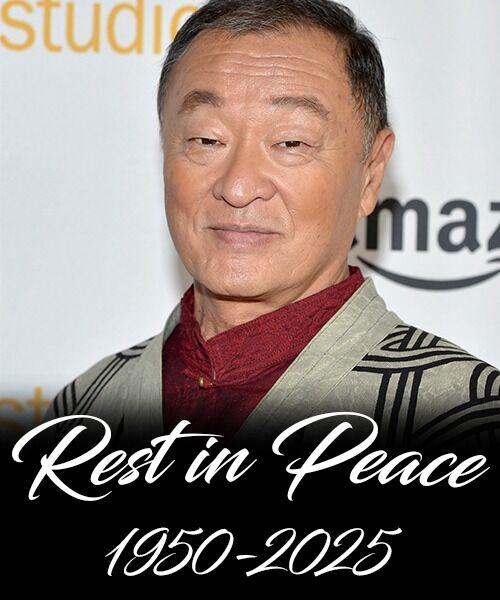
Cary-Hiroyuki Tagawa, the actor whose mere presence could fill a screen with authority and menace, has died at the age of 75 in Santa Barbara. For decades, Hollywood relied on his ability to create unforgettable villains, characters that could terrify and command attention without ever raising their voice. Tagawa’s craft was a study in subtlety, intimidation, and elegance—an art form that few performers achieve. Across more than 150 films and television shows, he brought precision, discipline, and humanity to roles that demanded both power and restraint, leaving a lasting impression on audiences worldwide.
Despite the menacing characters he often portrayed onscreen, those who knew Tagawa personally spoke of a man defined by kindness, thoughtfulness, and a deep commitment to the art of acting. Friends, colleagues, and students recalled him as a mentor and a source of wisdom, someone who treated the craft with reverence and the people around him with respect. While audiences saw him command scenes with cold efficiency, the man behind the camera carried warmth and humility, often quietly supporting younger actors and offering guidance on how to navigate the complex world of Hollywood without losing one’s integrity.
Tagawa’s story begins in Tokyo, Japan, where he was born into a multicultural environment that would shape his artistic sensibilities. Raised between Japan and the United States, he absorbed the rich traditions of both cultures. This dual heritage infused his work with a rare depth, allowing him to draw from a well of discipline, history, and philosophy that informed every role. Martial arts, for instance, were not merely a physical pursuit for Tagawa—they were a practice of focus, patience, and mastery. He spent decades training in disciplines such as kendo and karate, eventually creating his own system, Chun-Shin, which emphasized fluidity, balance, and mental discipline. This training gave his performances a tangible weight; even in moments of stillness, his characters carried the aura of someone fully in control, someone whose movements were deliberate and deliberate alone.
From the earliest stages of his career, Tagawa embraced the principle that acting was about craft above all else. He often encouraged young performers to “forget the Hollywood hype” and instead focus on skill, preparation, and understanding their characters. This approach shaped his own career, allowing him to navigate an industry that often pigeonholed actors of Asian descent into limited roles. Tagawa, however, transformed these opportunities into iconic performances, elevating each character with subtlety and intelligence. Even when portraying a villain, he imbued the role with humanity, depth, and nuance, challenging audiences to see more than a one-dimensional archetype.
His filmography reads like a tour through some of Hollywood’s most memorable stories. From Big Trouble in Little China and Rising Sun to Pearl Harbor, Elektra, and 47 Ronin, Tagawa consistently brought authority, presence, and precision to each role. On television, he left lasting impressions with appearances in MacGyver, Miami Vice, and perhaps most notably, The Man in the High Castle. Each performance reflected his dedication to craft, combining physical control, nuanced delivery, and an understanding of the subtleties that make a character compelling and memorable.
Yet it was his portrayal of Shang Tsung in the Mortal Kombat film franchise that became perhaps his most iconic and enduring role. As the soul-stealing sorcerer, Tagawa delivered a performance so commanding that it has influenced every subsequent interpretation of the character. His chilling line, “Your soul is mine,” became a hallmark of the franchise, a phrase that encapsulated his ability to merge menace, charisma, and authority in a single moment. The role demanded not only physical skill but also a capacity to convey otherworldly power through presence, voice, and expression, all of which Tagawa mastered with ease.
Central to Tagawa’s success was his rigorous training in martial arts. His experience in kendo, karate, and his own Chun-Shin system allowed him to approach fight choreography, movement, and on-screen conflict with a level of authenticity that few actors could match. Each gesture, each controlled motion, contributed to the believability of his characters, whether he was battling heroes, commanding armies, or portraying figures of mystical power. Yet beneath the physicality lay a profound understanding of the humanity that motivated his characters, giving them dimension and making them resonate with audiences beyond their immediate role in the story.
Offscreen, Tagawa maintained a philosophy that emphasized the importance of discipline, humility, and respect for colleagues and craft. He treated every project as an opportunity to grow, learn, and contribute, often going beyond the script to ensure that each scene achieved maximum impact. Colleagues described him as a consummate professional who approached work with a seriousness balanced by warmth and generosity, mentoring young actors and advocating for thoughtful representation in Hollywood. For Tagawa, the measure of a performance was never fame or accolades alone—it was the ability to convey truth, command presence, and evoke an authentic emotional response from the audience.
Tagawa’s personal life reflected the same principles of commitment, balance, and care that shaped his professional endeavors. He was a devoted father and grandfather, and at the time of his passing, he was surrounded by his children, sharing the final moments of a life marked by achievement, resilience, and artistry. His family remembers him as not only a brilliant actor but also a kind, thoughtful, and deeply disciplined individual who valued relationships and the well-being of those around him. Though his on-screen personas often inspired fear or awe, in private, he exuded patience, wisdom, and warmth, offering guidance and care to all who sought his counsel.
His passing was reportedly due to complications from a stroke, marking the end of a remarkable career that spanned decades and mediums. While the loss is profoundly felt in the entertainment community and among fans worldwide, his legacy endures through the roles he created, the characters he defined, and the countless actors he inspired. Cary-Hiroyuki Tagawa’s influence extends beyond the boundaries of any single performance; he elevated the standard of what it means to bring intensity, presence, and authenticity to the screen.
Tagawa’s impact on both film and gaming culture is undeniable. His embodiment of Shang Tsung in Mortal Kombat bridged live-action cinema and gaming fandom, creating a lasting cultural imprint that continues to resonate decades after the original release. Even actors portraying the character in newer adaptations acknowledge his performance as a benchmark, a demonstration of how physical skill, vocal delivery, and screen presence converge to create a timeless villain. In this sense, Tagawa’s influence transcends traditional boundaries, inspiring new generations of performers across multiple mediums.
As a figure who successfully navigated the challenges of typecasting, Hollywood expectations, and the demands of international cinema, Tagawa’s career is a model of resilience and strategic artistry. He consistently sought roles that allowed him to expand his craft while respecting his own artistic principles. His insistence on professionalism, preparation, and the careful study of character contributed to the memorability of each performance, ensuring that he would remain a beloved and respected figure in the eyes of both audiences and industry peers.
Cary-Hiroyuki Tagawa’s legacy is further solidified by his contributions to martial arts in entertainment, the mentorship he provided to younger actors, and his unwavering dedication to the craft of storytelling. His work reminds us that the most compelling villains are often defined not by overt displays of evil but by discipline, intelligence, and authenticity. He demonstrated that menace can coexist with humanity, that authority can be portrayed with elegance, and that artistry is as much about restraint as it is about power.
In reflecting on his life, one sees a man who mastered the delicate balance between public persona and private virtue. While audiences feared his characters, those close to him admired his warmth. While his villains dominated scenes, his kindness dominated real life. This duality—a commanding on-screen presence paired with personal humility—defines Cary-Hiroyuki Tagawa’s enduring influence.