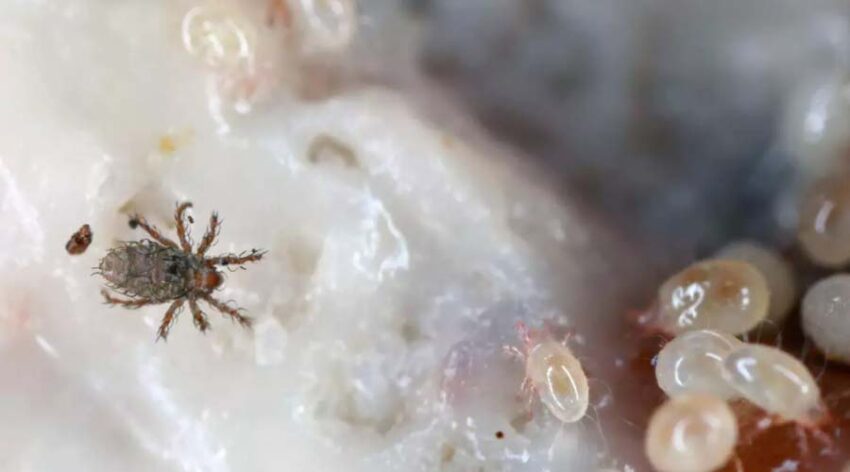
When most people think of mites, they picture itchy bites on pets or dust in the corners of a room. However, the truth is far more complex: microscopic mites can and do interact with humans in many ways — and in rare cases, they can cause health issues that are surprising, even alarming.
Mites Are Everywhere
Mites are tiny arachnids, relatives of spiders and ticks, that exist virtually everywhere on Earth. There are thousands of species, and while most are harmless to humans, some can live in human environments or even on the skin. Common examples include:
-
Dust mites: Found in bedding, carpets, and upholstered furniture, dust mites feed on dead skin cells and are a major source of household allergens.
-
Follicle mites (Demodex): These microscopic mites live in hair follicles and sebaceous glands of the face. Nearly every adult human has them, usually without noticing.
-
Scabies mites (Sarcoptes scabiei): These are parasitic mites that burrow under the skin, causing intense itching and rashes.
The ubiquity of mites can be unsettling, but for the majority of people, their presence is harmless. Most mites are invisible to the naked eye, and the immune system usually prevents any significant issues.
Rare and Unusual Cases
While everyday exposure is generally harmless, there are documented rare cases where mites have caused unusual problems in humans:
-
Demodicosis (Follicle Mite Overgrowth): In some individuals, the normally harmless Demodex mites multiply excessively, leading to red, irritated skin, rosacea-like symptoms, or eyelid inflammation. This condition is more common in people with compromised immune systems.
-
Crusted Scabies (Norwegian Scabies): A rare, severe form of scabies, crusted scabies occurs when a person has an extremely high number of scabies mites, sometimes hundreds of thousands, which can cause thick crusts of skin and widespread infection. This form is highly contagious but uncommon.
-
Mite Contamination from Animals: Though rare, certain animal mites (like bird mites or rodent mites) can temporarily infest humans. This may happen if a person sleeps near infested birds or rodents. The bites are itchy, red, and sometimes cause secondary infections, but the mites generally cannot survive long on humans.
-
Ocular Infestations: Extremely rare cases exist of mites affecting the eyes, such as Demodex mites in eyelash follicles causing blepharitis (eyelid inflammation) and chronic irritation. Specialized eyelid hygiene and treatments are usually effective.
Prevention and Awareness
Although mites are ubiquitous, a few simple measures can reduce the risk of problematic infestations:
-
Wash bedding and towels regularly in hot water.
-
Vacuum carpets and furniture frequently to minimize dust mites.
-
Maintain good personal hygiene, particularly around the eyes and face.
-
Avoid prolonged close contact with potentially infested animals or birds.

It is important to note that most mite exposures do not lead to illness. For rare cases where mites cause skin, eye, or systemic problems, medical consultation is essential. Dermatologists and allergists can provide targeted treatments, from topical creams to oral medications, depending on the type of mite involved.
A Tiny Reminder
Mites are a fascinating example of how humans share the planet — and even their bodies — with countless microscopic species. While the idea of invisible creatures living on us might be unsettling, awareness and good hygiene usually prevent any serious issues. The rare cases that make headlines remind us of the delicate balance between humans and the microscopic world surrounding us.

Even though mites can theoretically be “everywhere,” most encounters are harmless. Only in unusual or extreme circumstances do these tiny arachnids become a true medical concern — a reminder that the world, even at a microscopic scale, is full of surprises.