 The Latest: Downed jets puncture Trump’s and Hegseth’s claims of air invulnerability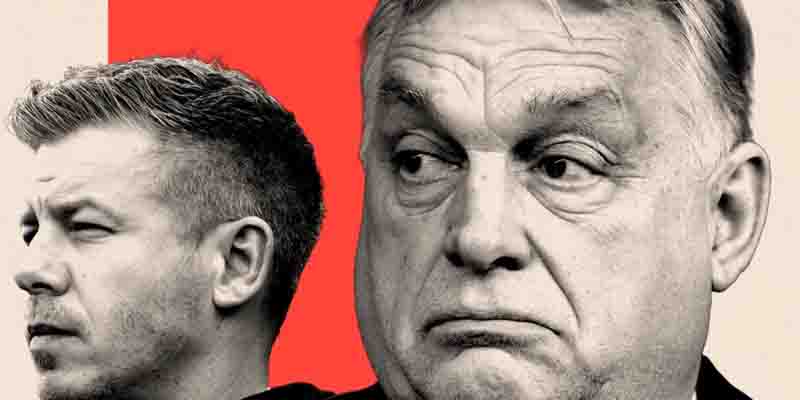
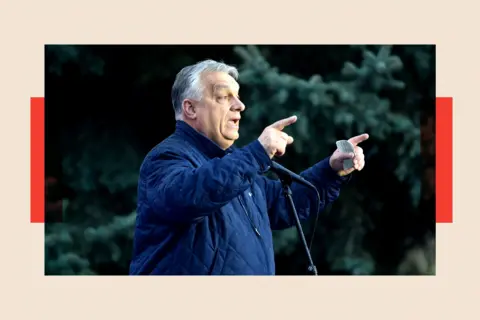
“All they stand for is anger, hatred, and destruction,” roared a hoarse Viktor Orban. The Hungarian prime minister was speaking at a mass election rally in Györ in western Hungary on 27 March, referring to opposition protesters who chanted “Filthy Fidesz” during his speech. For just a moment, his carefully cultivated image as the voice of calm navigating his country through stormy seas was shattered. His bad-tempered outburst showed a different side of a man used to cracking jokes and charming even his critics.
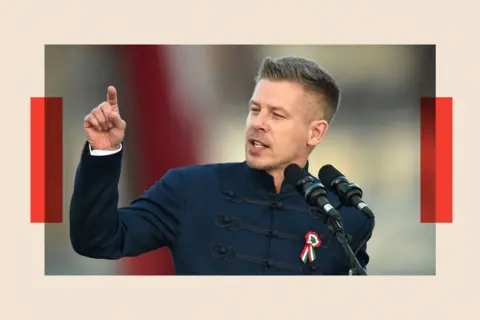
Most opinion polls put the opposition Tisza party and its leader Peter Magyar far ahead of Orban’s Fidesz – the latest by 58% to Orban’s 35%. And he is doing everything he can to close the gap. After 16 years of virtually unchallenged rule, Orban has been forced to take to the road again. In the past three elections, he gave few rallies. Now Europe’s longest-serving leader is trying to mobilise his supporters and reach the undecided. He has just a week left to rescue his government, and the international populist movement he embodies, from a crushing defeat.
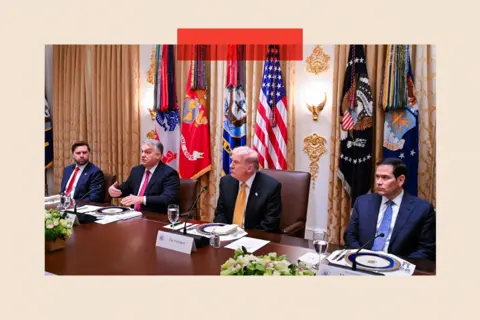
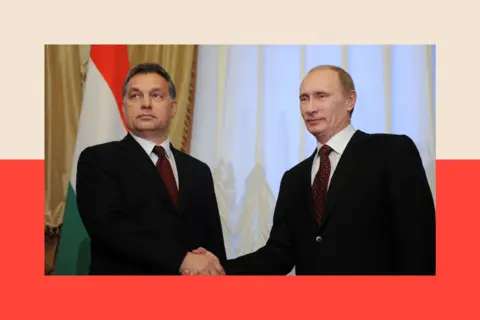
In power since 2010, Orban has had the support of both US President Donald Trump and Russian President Vladimir Putin. He has long been a thorn in the side of the EU – and one of the few EU leaders not supportive on Ukraine. For Europe’s growing band of nationalist parties, in power or on the brink of it, he is the model. The 12 April Hungarian parliamentary election is being watched closely all over the world.
 NurPhoto via Getty Images
“We can notice a big change in public perception,” said Endre Hann of the Median agency, a public-opinion research firm. In January, 44% of those asked said they thought Fidesz would win, compared with 37% for Tisza. By March, 47% believed Tisza would win, while 35% believed Fidesz would. “This reflects a huge change of trust. People believe that it can be changed,” he says.
An intriguing dynamic is playing out in this election – the same voter anger against those seen as “corrupt ruling elites” across Europe, is now working against him. In Hungary, it is now Orban and his Fidesz party who are seen by many, especially the young, as the “corrupt ruling elite”.
 Getty Images
The Orban government has been repeatedly accused of draining state coffers and giving state tenders for projects to companies owned by close associates. The government explains this concentration of wealth as an attempt to put wealth in national, instead of foreign hands.
The projects included bridges, football stadiums and motorways. His son-in-law, Istvan Tiborcz, owns a string of prominent hotels. His childhood friend Lörinc Meszaros, a former gas fitter, has become the wealthiest man in the country. Orban refuses to answer questions about the personal wealth of his friends and family. All deny wrongdoing.
Can Orban save himself by blaming Ukraine – and its EU backers – for his country’s woes? And can the smooth-talking lawyer who hopes to unseat him convince Hungarians, particularly those in rural areas which make up the Fidesz heartlands, that he can deliver the “more humane, better functioning country” that he promises?
Under pressure
Each day brings a new indication that Orban is in trouble, from alleged voter-intimidation schemes to a dramatic Russian proposal to stage a fake assassination attempt on Orban.
But Fidesz claims the sense that it’s in trouble has been cooked up by the opposition. “All these scandals are just the usual suspects trying to build a narrative,” says Zoltan Kiszelly, a political analyst from the government think tank Szazadveg. “When the opposition lose the election, this gives them an excuse to allege ‘fraud’.”
Political analyst Gabor Török – one of the few analysts in this extremely polarised society respected by both sides – wrote recently on his blog: “This is not the ‘calm strength’ or the ‘strategic calm,’ image, nor the one carefully cultivated for years and displayed on ‘Prime Minister of Hungary’ posters.
“If the remaining two weeks unfold like this, it does not bode well for the government side.”
The shockwaves of an Orban defeat would reverberate far beyond Hungary’s borders.
“Budapest is the headquarters of illiberal democracy in the world,” argues Michael Ignatieff, former rector of the Central European University, which was forced out of the Hungarian capital in 2019. “This is not just an election. This is a referendum on that whole model of authoritarian rule that Orban represents.”
 AFP via Getty Images
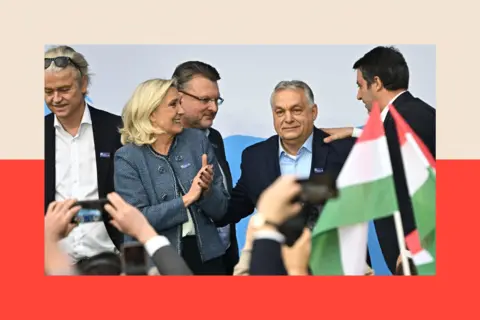
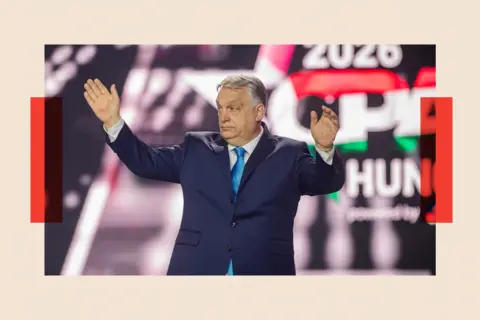
He’s referring to the network of think tanks, fellowships, and gatherings of right-wing influencers who zig-zag across the Atlantic to support one another. On consecutive days last month, the American Conservative Political Action Conference (CPAC), a platform for people across the political right to discuss ideas, and Patriots for Europe, the right-wing European Parliament group, held major events in Budapest.
The fact that no leading US politician attended the Hungarian CPAC event this year raised eyebrows within Fidesz, but the Republicans are not leaving Orban in the lurch. US secretary of state Marco Rubio was here in February, and vice president JD Vance is expected in Budapest a few days before the vote.
 AFP via Getty Images
A victory for Fidesz in this election would add momentum to the chances of far-right parties in France, Germany, Poland, Spain and Portugal. Defeat for Fidesz would take some of the wind out of their sails. “While the rest of Europe is being sucked into the radical nationalist tunnel, we can show the way out,” a senior Tisza official told me.
Despite a poor showing in the polls, Orban’s allies deny that there is panic in the Fidesz camp.
According to Zoltan Kiszelly, the crucial factor will be whether Fidesz can persuade their supporters to get out on polling day.
“We are very optimistic. Nobody believes in the opinion polls, neither our own, nor the opposition ones,” he says.
“The majority of the voters are for Fidesz. Of pensioners, of women, of the Gypsies [Roma], of the poor, of the blue collar workers, of the rural people. The question is, will they cast their vote?”
To make sure they do, Fidesz has worked hard to update its database of supporters. Around 4.5 million of the 8.2 million-strong Hungarian electorate live in small towns and villages – the Fidesz heartlands. Since 2002, Fidesz has built a strong system of local patronage in the villages – the mayor decides who receives work, and who gets firewood in winter.
According to an investigative documentary released last week, mayors have been told how many votes each village needs to produce for Fidesz. Those interviewed in the film claim the incentives include cash payments of €120 (£104) per vote, food coupons, prescription medicines and even illegal drugs in exchange for voting for Fidesz. Those who refuse say they are denied the chance to participate in public works schemes, often the only local work available.
Cars and minibuses are organised on election day. “Companions” stand by to accompany voters, who feign illiteracy or illness, into the voting booth, to make sure they vote for Fidesz and get their money, people interviewed in the film claim. There has been no official government reaction to these allegations. One minister told the BBC that any wrongdoing should be dealt with by the appropriate authorities.
Rival parties at previous elections offered potatoes and even small sums for votes, but nothing on the scale of this election, we were told by people who have been involved in elections over the decades.
“Everyone here votes Fidesz,” said Nikki, 32, in Tiszabö, a village of 2,000 inhabitants, with a large Roma majority, in the northern Great Plain region of Hungary.
She praises the Fidesz mayor for rebuilding the roads, the kindergarten, and the sports centre. She claims votes won’t need to be bought on 12 April, as Fidesz will win “because of the war”.
The Russian connection
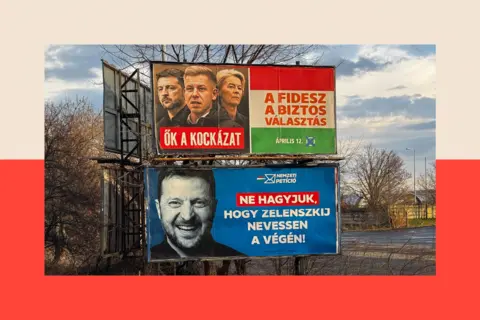
Orban has told voters that this election is a simple choice between peace and war.
According to Fidesz, only Orban can prevent the “warmongers” in Brussels from dragging the EU, and with it Hungary, into the war in Ukraine against Russia.
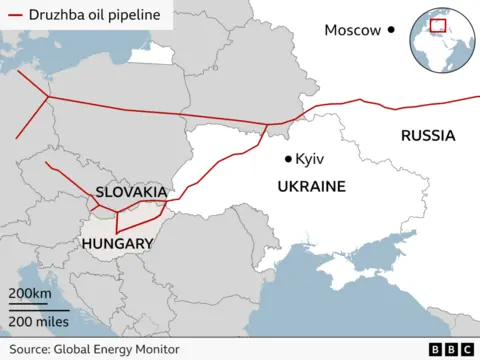
Peter Magyar, leader of the opposition Tisza party, is painted as a puppet of Brussels. The Fidesz message is that a vote for the opposition would mean that Hungary, as a Nato member, will be forced to send Hungarian troops either in a future Nato peacekeeping operation, or a full-scale war with Russia, and young Hungarian men will die again on the eastern front. That’s a message designed to resonate deeply in a country on the losing side of both World Wars. Since 2022, Orban has argued that Russia cannot be defeated, and that instead of supporting Ukraine militarily and economically, the West should pressure Kyiv to seek peace with Moscow – on Russia’s terms, if needed.
 AFP via Getty Images
“The Fidesz anti-Ukraine, pro-Russian message is flagging,” veteran pollster Endre Hann of the Median agency told me. His latest figures suggest a growing 52% of those asked agreed that “Russia committed a serious and unprovoked act of aggression against Ukraine” with its 2022 full-scale invasion. Just 33% agreed with the Fidesz narrative that “Russia acted legally, to defend its interests and security.”