 The Latest: Downed jets puncture Trump’s and Hegseth’s claims of air invulnerability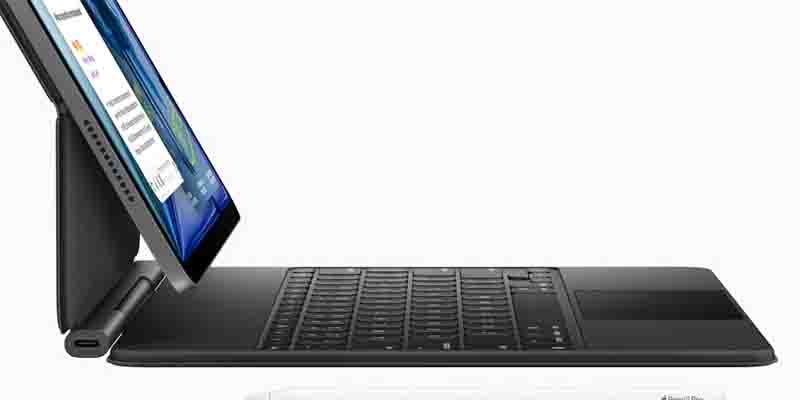
Apple has once again strengthened its position in the tablet market with the launch of its newest iPad model, the iPad Air powered by the M4 chip. Announced in March 2026, the new iPad Air is more than just a routine update. It represents Apple’s continued effort to make the iPad a serious device for work, study, creativity, and entertainment, while still keeping it lighter and more affordable than the iPad Pro. With major upgrades in performance, memory, connectivity, and software, the new iPad Air has quickly become one of the most exciting Apple products of the year.
For years, the iPad Air has occupied a unique position in Apple’s lineup. It is designed for users who want premium features and strong performance, but do not necessarily need the most expensive Pro model. The 2026 iPad Air with M4 continues that tradition perfectly. It brings advanced Apple silicon performance, compatibility with pro-level accessories, and major iPadOS improvements—making it one of the most well-rounded tablets Apple has ever produced.
One of the most important changes in the new iPad Air is the introduction of the M4 chip. This is a significant step forward because Apple has brought desktop-class power to a device that remains thin, portable, and efficient. According to Apple, the new iPad Air with M4 is up to 30 percent faster than the M3 iPad Air and up to 2.3 times faster than the iPad Air with M1. That is a major performance leap, especially for users who upgrade every few years. Whether someone is editing high-resolution photos, working on school projects, designing graphics, playing demanding games, or multitasking across several apps, the iPad Air now feels faster, smoother, and more capable than ever before.
The M4 chip also brings more than just speed. It improves graphics performance, enhances energy efficiency, and provides better support for AI-powered tasks. The iPad Air now includes a 16-core Neural Engine, which Apple says is much faster than older iPad Air models. This matters because modern devices are increasingly built around intelligent features such as image recognition, handwriting analysis, background removal in videos, note organization, and app-based AI tools. The M4 makes the iPad Air not only faster for today’s tasks but also better prepared for the future of mobile computing.
Another major improvement is the jump to 12GB of unified memory. Apple highlights this as a key upgrade, and it is easy to see why. More memory allows the iPad Air to handle larger apps, heavier multitasking, and more advanced workflows without slowing down. This is especially useful for students running research apps alongside note-taking tools, designers working with layered files, and professionals using video or document editing software. Combined with 120GB/s memory bandwidth, the device feels more responsive and more capable in real-world use. For many users, this may be one of the most important but least visible upgrades.
Apple continues to offer the new iPad Air in two sizes: 11-inch and 13-inch. This is a smart move because it gives users flexibility based on their needs. The 11-inch model is ideal for people who prioritize portability. It is easier to carry, lighter in the hand, and perfect for students, commuters, or casual users who want a powerful tablet they can take anywhere. The 13-inch model, on the other hand, offers more screen space for multitasking, content creation, document editing, and media consumption. For users who want a laptop-like experience without moving all the way to the iPad Pro, the larger iPad Air can be a perfect middle ground.
In terms of display quality, the new iPad Air uses Apple’s Liquid Retina display technology. The 11-inch model offers 2360 x 1640 resolution with 500 nits brightness, while the 13-inch version provides 2732 x 2048 resolution with 600 nits brightness. Both support Wide Color (P3), True Tone, a fully laminated display, and anti-reflective coating. These features make the screen look vibrant, sharp, and comfortable in different lighting conditions. While it does not use the more advanced display technology of the iPad Pro, the iPad Air’s screen remains excellent for reading, drawing, streaming, editing, and everyday work.
Design has always been one of the iPad Air’s strengths, and Apple has wisely kept that identity intact. The new iPad Air remains thin, sleek, and lightweight, making it easy to carry and comfortable to use for long periods. The 11-inch model is just 6.1mm thin and weighs around 464 grams, while the 13-inch model is also 6.1mm thick and weighs about 616 grams. These measurements help the iPad Air maintain its reputation as a premium but portable tablet. It is available in four attractive finishes: Blue, Purple, Starlight, and Space Gray. These color options add personality while keeping the design clean and professional.
Connectivity is another area where Apple has made meaningful progress. The 2026 iPad Air includes Apple’s newer connectivity hardware and supports Wi-Fi 7, which is a major upgrade over older Wi-Fi standards. This means faster wireless speeds, lower latency, and better performance in busy networks—especially important for cloud storage, video conferencing, streaming, and downloading large files. Apple also notes support for its latest wireless technologies, improving AirDrop, hotspot reliability, and overall wireless performance. For users who work on the go or rely on fast and stable internet, this is a valuable improvement.
One of the strongest reasons to consider the new iPad Air is its compatibility with Apple’s best accessories. It supports Apple Pencil Pro as well as Apple Pencil (USB-C), giving users options depending on their budget and needs. For artists, students, and note-takers, Apple Pencil transforms the iPad Air into a digital notebook and creative canvas. Features like pressure sensitivity, hover support, and advanced Pencil Pro interactions make writing and drawing feel more natural and precise. Apple also pairs the iPad Air with the Magic Keyboard for iPad Air, which adds a floating design, a built-in trackpad, and a 14-key function row. This turns the iPad Air into something much closer to a lightweight laptop replacement.
Software is where the new iPad Air becomes even more impressive. The device is built to take full advantage of iPadOS 26, which Apple describes as one of the biggest iPadOS upgrades ever. iPadOS 26 introduces a new windowing system, improved app management, better multitasking, an updated Files app, folder customization, and a dedicated Preview app for PDFs and images. These changes make the iPad feel more like a productivity machine rather than just a large phone. Users can organize apps more freely, switch between tasks more efficiently, and work with files in a more desktop-like way. For students, business users, and creators, this software upgrade is just as important as the hardware.
The new iPad Air is also well-positioned for Apple Intelligence and AI-assisted workflows. Apple specifically highlights the M4 chip, faster Neural Engine, and more memory as advantages for AI tasks. This could include note summarization, image search, smarter writing tools, voice processing, and creative app enhancements. As more apps adopt on-device intelligence, the iPad Air becomes increasingly useful not just as a consumption device, but as an active creative and productivity partner.
Storage options are generous as well. Apple offers the new iPad Air in 128GB, 256GB, 512GB, and 1TB capacities. This range is important because different users have very different needs. A student may be comfortable with 128GB or 256GB, while a video editor, designer, or photographer may benefit greatly from 512GB or 1TB. By offering higher storage tiers, Apple makes the iPad Air more practical for advanced users without forcing them into the iPad Pro lineup.
Perhaps the most impressive thing about the 2026 iPad Air is its value. Apple says the new model arrives at the same starting price as the previous generation, despite delivering more power, more memory, faster connectivity, and better future-readiness. That makes the iPad Air especially appealing in a market where buyers are increasingly selective about spending. It gives users a device that feels premium, capable, and modern without demanding the very high price of the Pro models.
In conclusion, the new iPad Air (M4) is one of the most balanced and compelling tablets Apple has released in years. It offers a powerful M4 chip, 12GB of memory, two excellent size options, beautiful Liquid Retina displays, Wi-Fi 7, support for Apple Pencil Pro and Magic Keyboard, and a major boost from iPadOS 26. It is fast enough for creators, flexible enough for students, powerful enough for professionals, and simple enough for everyday users.
For anyone looking for the newest iPad model that combines performance, portability, and real-world value, the 2026 iPad Air stands out as an exceptional choice. It proves that the iPad is no longer just a secondary device—it is becoming a true productivity platform in its own right. Apple has not only improved the iPad Air; it has redefined what users should expect from a modern tablet.