 The Latest: Downed jets puncture Trump’s and Hegseth’s claims of air invulnerability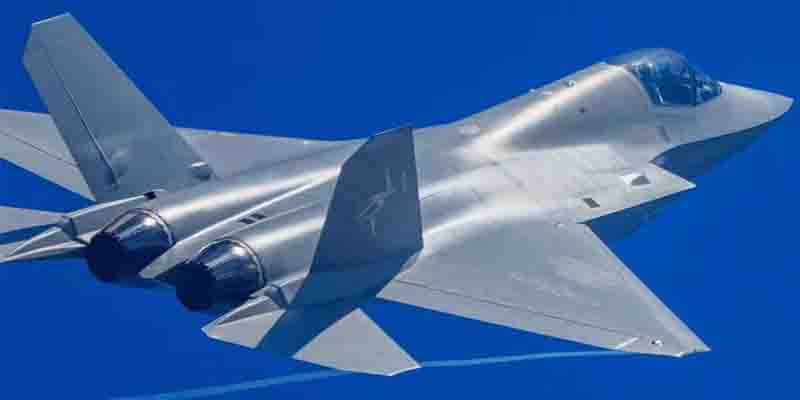
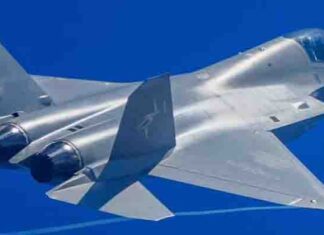
The development of modern fighter aircraft has become one of the most important signs of military strength in the 21st century. Nations around the world are investing heavily in advanced aviation technology, and stealth fighter jets are now at the center of global defense strategies. Among the newest and most talked-about aircraft in this category is the J-35 fighter jet, a next-generation stealth aircraft developed by China. This aircraft represents a major step forward in China’s efforts to strengthen its air force and naval aviation capabilities.
The J-35 has gained attention not only because of its stealth design but also because of its role in the changing balance of military power in Asia and beyond. With advanced radar-evading technology, modern avionics, and the ability to operate from aircraft carriers, the J-35 is expected to play a key role in China’s future military operations. As global tensions continue to evolve, understanding the purpose, design, and strategic significance of the J-35 helps us better understand the future of aerial warfare.
In this article, we will explore what the J-35 fighter jet is, how it was developed, its major features, and why it matters on the global stage.
What Is the J-35 Fighter Jet?
The J-35 is a Chinese stealth fighter jet designed to serve as a modern, fifth-generation combat aircraft. It is widely believed to be intended for use by the People’s Liberation Army Navy (PLAN) and possibly the People’s Liberation Army Air Force (PLAAF). The aircraft is being developed by Shenyang Aircraft Corporation, one of China’s leading aerospace manufacturers.
The J-35 is often compared to other fifth-generation fighter jets such as the American F-35 Lightning II because of its stealth shape, internal weapons bays, and carrier-capable design. However, the J-35 is not simply a copy of any existing aircraft. It has its own design philosophy, mission goals, and strategic purpose within China’s military modernization program.
Initially known in some reports as the FC-31 Gyrfalcon, the aircraft started as an export-oriented project. Over time, the design evolved into what is now recognized as the J-35, a more refined and militarily integrated platform.
The Development History of the J-35
China has spent decades working to close the technology gap between its military aircraft and those of leading Western nations. The development of the J-35 is part of a broader effort to create a complete family of modern combat aircraft, including the J-20 stealth fighter and other advanced systems.
The early version of the aircraft, the FC-31, was first publicly shown in the 2010s. At that time, analysts believed it was designed mainly for export to countries looking for a stealth fighter at a lower cost than Western alternatives. However, as China expanded its aircraft carrier program and began building more advanced naval platforms, the need for a carrier-based stealth fighter became more urgent.
This need led to significant redesigns and improvements. The newer J-35 version appears to include stronger landing gear, a reinforced airframe, and other features necessary for carrier operations. These improvements suggest that the aircraft is being tailored for launch and recovery from Chinese aircraft carriers equipped with catapult systems.
The transformation from FC-31 to J-35 shows how China has adapted an earlier concept into a more capable and mission-focused military aircraft.
Key Features of the J-35 Fighter Jet
One of the most interesting aspects of the J-35 is its combination of stealth, speed, and flexibility. Below are some of the major features that make this aircraft stand out.
1. Stealth Technology
The J-35 is designed with stealth in mind. Its smooth body shape, angled surfaces, and internal weapons storage help reduce its radar signature. This means enemy radar systems may find it more difficult to detect or track the aircraft.
Stealth is one of the most important features in modern air combat because it allows a fighter jet to approach targets with less risk of being seen. This gives pilots a major tactical advantage.
2. Internal Weapons Bays
Like other fifth-generation fighters, the J-35 appears to carry missiles and other weapons inside the body of the aircraft rather than on external pylons. This reduces drag and helps maintain stealth performance.
Internal weapons bays are a key feature because they allow the aircraft to remain difficult to detect while still carrying advanced air-to-air and air-to-surface weapons.
3. Advanced Avionics
Although full technical details have not been officially released, experts believe the J-35 is equipped with modern avionics, including advanced radar systems, sensor fusion, and digital cockpit technology.
Sensor fusion allows information from different systems—such as radar, infrared sensors, and communication networks—to be combined into a single, clear picture for the pilot. This improves situational awareness and helps pilots make faster decisions in combat.
4. Carrier Capability
A major difference between the J-35 and some other Chinese fighters is its likely role as a carrier-based aircraft. Carrier operations require special design features, including stronger landing gear, folding wings in some cases, and arrestor hooks for landing.
If fully integrated into China’s carrier air wings, the J-35 could become a cornerstone of Chinese naval air power.
5. Multi-Role Mission Design
The J-35 is expected to perform a variety of missions. These may include:
- Air superiority
- Interception
- Precision strike missions
- Maritime attack
- Reconnaissance
- Fleet defense
This flexibility makes the aircraft valuable in both offensive and defensive operations.
How the J-35 Compares to Other Fighter Jets
Whenever a new stealth fighter is introduced, comparisons quickly follow. The J-35 is often compared with the F-35, but it is also relevant to compare it with China’s own J-20.
J-35 vs F-35
The American F-35 is one of the most advanced and widely used stealth fighters in the world. It has been battle-tested, widely exported, and supported by a large international program. The J-35, on the other hand, is still emerging and has less public information available.
However, the J-35 appears to aim for a similar role in some ways, especially in carrier-based operations and multi-role mission capability. If China can successfully deploy it in large numbers, it could become a serious regional competitor.
J-35 vs J-20
The J-20 is China’s larger stealth fighter and is generally seen as an air superiority platform with long-range capabilities. The J-35 appears to be smaller, more flexible, and possibly better suited for aircraft carrier use.
In simple terms:
- J-20 = larger, long-range, air dominance focus
- J-35 = smaller, multi-role, carrier-capable focus
Together, they could give China a more balanced and modern air combat fleet.
Why the J-35 Matters Strategically
The J-35 is important not only because of its technology but because of what it represents strategically.
1. Strengthening China’s Aircraft Carrier Program
China has been rapidly expanding its naval power, including the construction of advanced aircraft carriers. A carrier is only as effective as the aircraft it can launch. The J-35 gives China the potential to operate a true stealth fighter from its carriers, significantly increasing their combat value.
This would allow China to project power farther from its shores and better defend maritime interests.
2. Shifting Regional Military Balance
In the Asia-Pacific region, air power plays a major role in security planning. Countries such as the United States, Japan, South Korea, and India all pay close attention to new Chinese military technologies.
If the J-35 enters full operational service in significant numbers, it could change how neighboring countries plan their air defense and naval operations.
3. Technological Prestige
Developing a fifth-generation stealth fighter is a major achievement. Only a few countries have demonstrated the ability to build such aircraft. The J-35 signals that China is serious about becoming a world leader in aerospace and defense technology.
4. Potential Export Influence
Although the current focus appears to be domestic military use, earlier FC-31 concepts suggested export potential. In the future, China may market variants of the aircraft to allied nations looking for advanced fighters.
This could expand China’s influence in global defense markets.
Challenges Facing the J-35 Program
Despite the excitement around the J-35, there are still challenges ahead.
Engine Performance
One of the most common challenges for advanced fighter programs is engine development. High-performance engines are essential for speed, reliability, and combat effectiveness. If engine technology lags behind, the aircraft may not reach its full potential.
Carrier Integration
Operating from an aircraft carrier is much more difficult than operating from land bases. The J-35 must prove that it can launch, land, and operate effectively in rough maritime conditions.
Combat Readiness
It takes years to move from prototype flights to full operational service. Training pilots, building maintenance systems, and producing aircraft at scale are all major steps.
Global Scrutiny
Because of its strategic importance, the J-35 will continue to be closely watched by military analysts worldwide. Every test flight and design update will be studied.
The Future of the J-35
The future of the J-35 looks promising. As China continues to invest in aircraft carriers, naval aviation, and stealth technology, the J-35 is likely to become a central part of its military plans.
In the coming years, we may see:
- More public test flights
- Carrier launch and landing trials
- New engine improvements
- Larger production numbers
- Integration into Chinese naval air wings
If these steps are completed successfully, the J-35 could become one of the most important military aircraft in Asia.
Conclusion
The J-35 fighter jet is more than just another military aircraft. It represents China’s growing ambitions in stealth aviation, naval power, and next-generation warfare. With its stealth design, multi-role capability, and likely carrier-based mission, the J-35 could significantly strengthen China’s military position in the years ahead.
While many details remain secret or still under development, the overall direction is clear: China wants a powerful, modern, and flexible stealth fighter that can operate both at sea and in contested airspace. The J-35 appears designed to meet that goal.
As military technology continues to evolve, the J-35 will remain a key aircraft to watch. Whether viewed as a symbol of innovation, a strategic tool, or a sign of shifting global power, it is already making an impact in defense discussions around the world.
For aviation enthusiasts, defense analysts, and curious readers alike, the J-35 offers a fascinating look at the future of air combat.