 The Latest: Downed jets puncture Trump’s and Hegseth’s claims of air invulnerability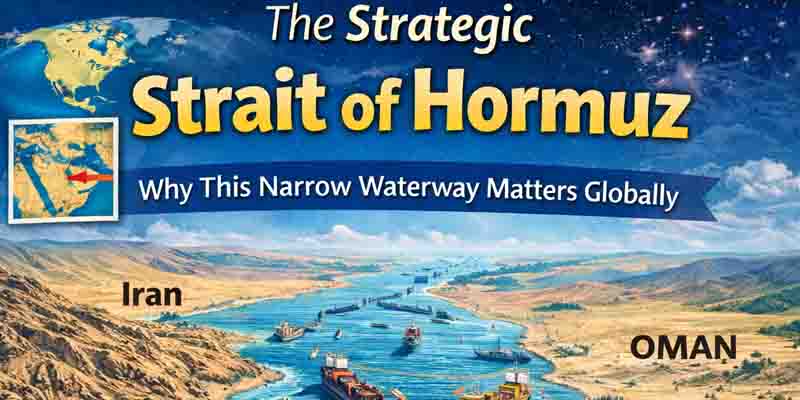
The Strait of Hormuz is one of the most strategically important waterways on Earth. Though it may appear as just a narrow stretch of water between landmasses, its influence extends across global trade, energy markets, and international politics. Every day, millions of barrels of oil pass through this small channel, making it a vital artery of the global economy.
In this article, we explore the geography, importance, history, and future of the Strait of Hormuz, and why the world closely watches this critical region.
What is the Strait of Hormuz?
The Strait of Hormuz is a narrow water passage that connects the Persian Gulf to the Gulf of Oman, which then opens into the Arabian Sea and the wider Indian Ocean.
It lies between:
- Iran to the north
- Oman and the United Arab Emirates (UAE) to the south
At its narrowest point, the strait is only about 33 kilometers (21 miles) wide, with shipping lanes even narrower.
Why is the Strait of Hormuz So Important?
The importance of the Strait of Hormuz comes mainly from its role in global oil transportation.
1. The World’s Oil Lifeline
Around 20% of the world’s oil supply passes through the Strait of Hormuz. Oil from major producers like Saudi Arabia, Iraq, Kuwait, and the UAE is transported through this route to global markets.
If this passage were blocked, it could disrupt global energy supplies and cause oil prices to rise sharply.
2. Global Trade Route
Beyond oil, the strait is also used for transporting:
- Natural gas
- Commercial goods
- Industrial materials
It serves as a major shipping route connecting the Middle East with Asia, Europe, and beyond.
3. Strategic Military Importance
Due to its economic significance, the Strait of Hormuz is heavily monitored by military forces from several countries.
Naval fleets patrol the area to ensure safe passage and prevent conflicts. Any tension in the region can quickly attract global attention.
Geography and Navigation Challenges
The Strait of Hormuz may look simple on a map, but navigating it is not easy.
Narrow Shipping Lanes
Ships must pass through designated lanes that are only a few kilometers wide. This makes navigation complex and increases the risk of accidents.
Heavy Traffic
Hundreds of ships pass through the strait daily, including:
- Oil tankers
- Cargo ships
- Military vessels
This high traffic density requires careful coordination and monitoring.
Environmental Conditions
The region experiences:
- Extreme heat
- Strong currents
- Occasional sandstorms
These factors can make navigation more difficult.
Historical Significance
The Strait of Hormuz has been important for centuries, even before the discovery of oil.
Ancient Trade Routes
In ancient times, the strait was part of key trade routes connecting the Middle East with India and East Africa. Merchants transported spices, textiles, and other valuable goods through this region.
Colonial Influence
During the age of exploration, European powers recognized the importance of the strait and sought control over nearby territories to dominate trade.
Modern Era
In the 20th and 21st centuries, the discovery of oil transformed the Strait of Hormuz into a global economic hotspot.
Political Tensions and Security Concerns
The Strait of Hormuz is not just an economic hub—it is also a center of geopolitical tension.
Regional Conflicts
Political disagreements between countries in the region can affect the security of the strait. Any conflict may threaten the free flow of ships.
Threat of Blockade
There have been instances where threats were made to block the strait. Even the possibility of such action can impact global markets.
International Response
Countries around the world closely monitor the situation. International coalitions often work together to ensure stability and safe navigation.
Economic Impact on the World
The Strait of Hormuz has a direct impact on the global economy.
Oil Prices
Any disruption in the strait can lead to a sudden increase in oil prices, affecting:
- Transportation costs
- Electricity prices
- Inflation
Global Markets
Stock markets and international trade are sensitive to developments in the region. Stability in the strait supports economic growth worldwide.
Environmental Risks
Heavy shipping activity in the Strait of Hormuz also brings environmental challenges.
Oil Spills
Accidents involving oil tankers can lead to spills, causing severe damage to marine life and coastal ecosystems.
Marine Pollution
Increased ship traffic contributes to pollution, affecting water quality and biodiversity.
Future of the Strait of Hormuz
As the world evolves, the role of the Strait of Hormuz continues to change.
Alternative Routes
Some countries are exploring pipelines and alternative routes to reduce dependence on the strait.
Renewable Energy
The shift toward renewable energy sources may reduce reliance on oil in the future, but the strait will remain important for decades.
Technological Advancements
Improved navigation systems and monitoring technologies are making shipping safer and more efficient.
Why the World Watches the Strait of Hormuz
The Strait of Hormuz may be small in size, but its global importance is immense. It affects energy supply, international trade, and geopolitical stability.
Any event in this region can have ripple effects across the world, influencing economies and governments alike.
Conclusion
The Strait of Hormuz is more than just a waterway—it is a lifeline of the global economy. Its strategic location, economic importance, and political sensitivity make it one of the most closely watched regions in the world.
Understanding its role helps us appreciate how interconnected our world truly is. From the fuel in our vehicles to the goods we use daily, many aspects of modern life are linked to this narrow but powerful passage.
As the world moves toward new energy solutions and technologies, the Strait of Hormuz will continue to play a vital role in shaping global dynamics.